Street pranks and hidden camera videos draw views on video platforms. Creators see high engagement from public reactions, so they take cameras onto sidewalks, plazas, and transit stations. A setup that looks simple on a phone screen involves specific municipal, civil, and criminal statutes once you set foot outside your home studio. You are running a small production company on asphalt, and you share that space with pedestrians who have legal rights.
Failing to understand the rules leads to confiscated gear, trespass citations, civil lawsuits, and platform takedowns. This guide sets out the baseline legal operational concepts for street gags, hidden mic setups, and public releases. Laws change across municipal boundaries and state lines. Treat these notes as field procedures and operational principles, and consult a qualified attorney in your jurisdiction before you invest production funds into public pranks.
Public thoroughfares versus quasi-public commercial property
Filming rights change the moment your boot leaves municipal pavement and steps onto private stone. A municipal sidewalk, a public park, and the roadway outside city hall are traditional public forums under United States constitutional law. In these zones, citizens have a baseline right to observe, speak, and capture images. You do not need private permission to stand on a public sidewalk and film what happens in plain sight, provided you do not break standard conduct ordinances.
Quasi-public property looks like public space but belongs to private entities. Examples include shopping mall concourses, outdoor lifestyle centers, train stations, grocery store parking lots, and stadium plazas. Even though thousands of pedestrians walk through these spaces daily, property managers hold full legal authority to set conduct rules. They can ban video recording entirely, demand permits, or order you off the parcel immediately.
If an owner, security guard, or retail manager tells you to stop filming or leave private property, your legal right to remain ends immediately. Continuing to record or refusing to walk away constitutes criminal trespass in most jurisdictions. The table below outlines how common physical locations differ in access and filming authority.
| Location Type |
Ownership Status |
Baseline Right to Film |
Authority to Expel |
| City Sidewalk |
Public municipality |
Protected by public forum doctrine |
Law enforcement under local conduct codes |
| Shopping Mall Interior |
Private corporation |
None without written permission |
Security staff and property management |
| Transit Center Platform |
Public transit authority |
Subject to specific agency transit rules |
Transit police and authorized officers |
| Outdoor Retail Plaza |
Private commercial landlord |
Permitted only until revoked |
On-site guards and property managers |
Hidden camera pranks inside grocery stores or clothing shops present high legal exposure. Entering a business with the intent to stage a disruption can negate the implied consent businesses extend to normal shoppers. In some states, entering a building under false pretenses to record commercial video without notice supports civil claims for fraud or breach of implied license.
Two-party consent audio laws and open recording rules
Video capture and audio capture fall under separate legal frameworks. Most street gag creators focus on cameras and forget the microphones. United States wiretap and eavesdropping statutes regulate the recording of oral communication. The critical legal question is whether the person speaking has an objectively reasonable expectation of privacy at the moment of recording.
Federal law and roughly 35 states follow one-party consent rules. In these jurisdictions, you can record a conversation as long as one participant consents to the recording. If you or your actor is part of the dialogue, you supply that consent. However, roughly 15 states enforce two-party or all-party consent rules. In states like California, Florida, Massachusetts, Pennsylvania, and Illinois, every individual involved in a private oral conversation must agree to the recording. Hidden microphones pinned to actors who bait strangers into spoken conversations can trigger felony eavesdropping charges in all-party jurisdictions if the conversation is deemed confidential.
Audio recording laws generally require distinct operational handling depending on gear and placement:
- Open Boom and Camera-Mounted Mics: Microphones visible to everyone on the street eliminate claims of secret surveillance. A bystander who walks up to a person holding an open microphone cannot easily claim an expectation of privacy.
- Concealed Lavaliers and Pocket Recorders: Hidden audio bugs capture low-volume, private exchanges. If an actor whispers to a stranger on a bench, a court may determine that the stranger held a reasonable expectation that their words were not being recorded for broadcast.
- Parabolic and Directional Shotgun Systems: Pointing high-gain long-range microphones at people across a street captures audio they believed was out of earshot. This triggers eavesdropping disputes even in public settings.
Courts examine ambient noise, distance between parties, and physical location to decide if privacy existed. A person yelling across a crowded, noisy crosswalk rarely retains an expectation of privacy. A person sitting at an outdoor cafe table leaning in to speak softly often does. If you work in an all-party consent state, keep your sound capture methods visible, or obtain written retroactive audio consent before you leave the location.
Standard model release documents for online publication
Publishing an unreleased video of a private citizen on monetization platforms exposes you to two common torts: misappropriation of the right of publicity, and false light invasion of privacy. The right of publicity prevents using an individual name, voice, or likeness for commercial gain without permission. Video platforms share ad revenue with channels. That revenue stream classifies your channel output as commercial enterprise in many state courts.
Editorial news coverage does not require releases because the First Amendment protects commentary on matters of public interest. Street comedy rarely qualifies for the news exemption. A prank that startles an accountant on his lunch break is entertainment, not civic news. If you publish that clip alongside mid-roll advertisements, paid brand integrations, or paywalled member tiers, that accountant can claim you exploited his likeness for direct profit.
A functional model release must be a clear, written agreement executed on paper or via an auditable digital signature app. Verbal releases captured on camera can fail in court if the subject later claims they were confused, coerced, or not informed of the monetization scope. A proper production model release must contain several concrete terms:
- Identification of Parties: The full legal name, signature, date, and contact telephone number or email address of the participant.
- Scope of Rights Granted: Explicit assignment of rights to use the participant likeness, voice, image, and performance across all media platforms, whether currently known or invented later, globally and in perpetuity.
- Commercial Consideration: A statement verifying that the participant received consideration. This can be nominal cash, a five-dollar gift card, or an explicit statement that the chance to appear in a public entertainment production serves as valid legal consideration.
- Waiver of Review: Language explicitly waiving the right of the participant to inspect or approve the finished edit, audio mix, or thumbnail art before release.
- Parental Consent Block: A dedicated signature block for a parent or legal guardian if the participant is under 18 years of age. Minors cannot sign binding release contracts.
When an individual flatly refuses to sign a release after a prank concludes, you have two choices: cut the footage entirely, or blur their face and pitch-shift their voice. If you rely on blurring, ensure you obscure unique tattoos, distinct hair color, uniforms with employer logos, and vehicle license plates. If an associate can identify the person from the remaining visual context, your liability remains active.
Avoiding obstruction of pedestrian and vehicle traffic
Freedom of speech in public forums does not grant permission to block sidewalks, street lanes, or building entrances. Municipal police and transit officers regulate the time, place, and manner of street activities to protect public safety. If your production halts the flow of pedestrian traffic, you violate local obstruction laws, which can lead to immediate shutdown and field citations.
Most cities draw the line between handheld shooting and commercial production at equipment footprint. A single operator holding a mirrorless camera and an actor holding a cardboard sign rarely triggers permit rules. The moment you place an accessory on the sidewalk, the city views you as an industrial user of public infrastructure. Common items that change your status include:
- Light stands, C-stands, and reflector panels.
- Tripods and multi-camera arrays placed on footpaths.
- Props left unattended on public rights-of-way.
- Cables or mats crossing pedestrian walkways.
- Crowds of onlookers exceeding six to eight people that bottleneck a sidewalk.
Local municipal codes generally require a clear walkway width of at least four to five feet to comply with the Americans with Disabilities Act. If your prank causes pedestrians with strollers or wheelchairs to step into the street to bypass your crew, an officer can issue a citation for disorderly conduct or public nuisance. Keep your entire setup mobile. If the crew cannot pick up all gear and walk 20 feet within ten seconds, your footprint is too large for unpermitted guerrilla production.
Pre-production legal checklist for public spaces
Run through an operational checklist before your team unzips camera bags in the field. Resolving jurisdictional questions in advance prevents lost production days and impounded memory cards.
Step 1: Check property boundaries
Pull up municipal tax parcel maps online for your target filming zone. Identify where city-owned property ends and private commercial frontage begins. Mark cross streets with public medians or city parks, and note the private boundaries of nearby retail banks, restaurants, and transit hubs.
Step 2: Verify state audio consent status
Confirm the wiretap laws for the state where the shoot happens. If the shoot takes place in an all-party consent state, instruct field audio technicians to use visible microphones, or assign a production assistant to collect signed releases immediately after every interaction.
Step 3: Review the prank mechanic for tort exposure
Analyze the specific actions your actors will perform. A prank must not simulate physical violence, present fake weapons, create false reports of fire or crime, or block a citizen from walking away. Trapping a person in an elevator or cornering them against a wall constitutes false imprisonment under civil law. Touching someone without consent constitutes battery.
Step 4: Pack physical release clipboards and digital backups
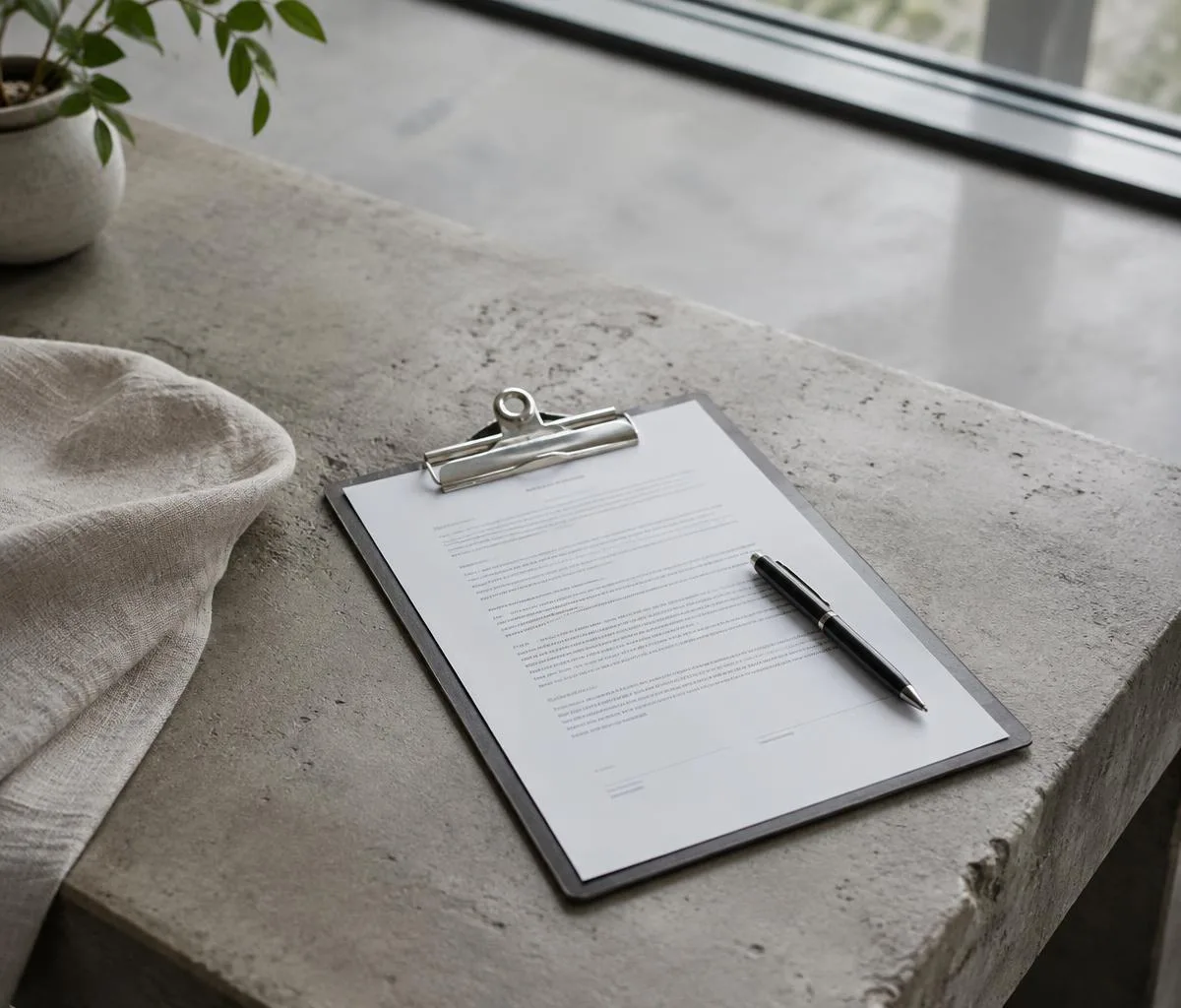
Print 40 hard copies of your standard model release form. Keep them on a sturdy clipboard with five functioning pens. Install a dedicated release-tracking application on a production phone to scan identity cards, capture signatures, and record timestamps for every encounter.
Step 5: Prepare identification and permit credentials
Ensure all crew members carry government-issued photo identification. If your city offers a simple low-impact filming registration or non-commercial permit, keep a printed copy in your gear bag alongside your certificate of general liability insurance.
Creators frequently repeat administrative errors that leave them vulnerable to costly civil claims. Recognizing these field mistakes helps keep your productions inside legal bounds.
- Assuming public property extends to storefronts: Sidewalk dining enclosures and recessed entryways often belong to the private building owner. Standing inside a recessed shop doorway to hide a camera is private trespass, not public sidewalk filming.
- Paying minors for releases without parents: Handing twenty dollars to a 16-year-old on the street for a release signature is legally void. A minor lacks capacity to contract, and their parents can sue for invasion of privacy months after the video uploads.
- Faking emergency situations: Staging heart attacks, shouting about bombs, or leaving abandoned packages in public spaces creates mass panic. These acts cross the line into criminal reckless endangerment, which carries jail time and heavy restitution costs for deployed emergency services.
- Using copyrighted public performances: Filming a street musician as background audio for your prank requires music licensing rights. If their song appears in your monetized video, the clip risks Content ID strikes or takedowns from rights administrators.
- Relying on verbal agreements on tape: A person laughing on camera saying "Yeah, you can post it" can easily claim they thought it was for a private student project. Written model releases with specific commercial monetization clauses protect you in contract disputes.
Do not wait until you are standing on a street corner with an angry pedestrian to figure out your documentation workflow. Start by building a binder for your channel. Draft a clean, single-page model release document that covers video, photo, audio, and all promotional marketing formats. Have a local intellectual property or media defense lawyer review that draft to ensure it complies with your specific state statutes.
Next, visit your city government website and search for the film office or special events coordinator. Review their threshold requirements for handheld recording versus permitted commercial shoots. Bookmark their contact numbers, and save digital copies of your liability insurance and ID cards directly to your phone. Establish a clear shoot protocol: if an encounter turns hostile, hit stop, apologize, walk away, and delete the file. Protecting your channel from litigation matters far more than saving a three-minute comedy clip.
This material provides general entertainment ideas only: consult local statutes and property owners before filming or using props in public spaces. Disclaimer